The Top Ten Phenomenon Cases That Survive Scrutiny
From The Phenomenon: Under the Hidden Sky by Robert Allan
There is a difference between a UFO story and a case that survives scrutiny. Stories multiply endlessly. Cases with independent sensor data, credentialed witnesses, physical trace evidence, and no conventional explanation that holds up under pressure. Those are much rarer. When J. Allen Hynek worked as the Air Force's own scientific consultant on Project Blue Book, roughly twenty percent of the reports he examined refused to resolve, even under criteria deliberately designed to explain them away. The Condon committee's independent review put the unexplained rate at twenty-five percent. One in four.
What follows is not a greatest-hits list. It is a sample of ten cases surveyed in The Phenomenon: Under the Hidden Sky, chosen because each one clears a specific evidentiary bar: multiple independent witnesses, physical or sensor evidence, and no successful conventional rebuttal. They are not the flashiest incidents in the record. They are the ones that don't go away.
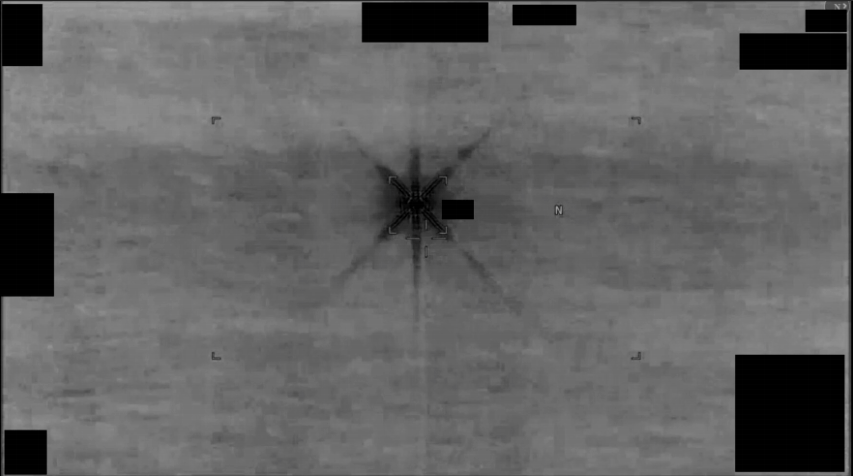
An 18-second infrared clip recorded by a U.S. military platform over the Yellow Sea in 2025, forwarded by U.S. Indo-Pacific Command to the Pentagon's All-Domain Anomaly Resolution Office, and released to the public by the Department of War on July 10, 2026, as part of the fourth PURSUE declassification tranche. Case status: unresolved. This is not archival material. It happened last year. U.S. Department of War / All-Domain Anomaly Resolution Office (AARO), via WAR.GOV/UFO. Public domain (U.S. federal government work).
What the Ten UAP Cases Are For
None of these cases proves extraterrestrial origin. None proves interdimensional origin. Each proves something narrower and much harder to dismiss: after every conventional explanation is applied as rigorously as possible, a meaningful residue of genuinely anomalous evidence remains, documented by military radar, military cameras, military personnel, and official government investigations in multiple countries across multiple decades. The residue is statistically robust. It has persisted under the most hostile investigative conditions imaginable for nearly eighty years.
Ten cases isn't the argument. The argument is that ten is the tip. The Phenomenon: Under the Hidden Sky works through the deeper evidentiary record chapter by chapter: six chapters of hard evidence, seven chapters testing the major theoretical frameworks against the same underlying data, and four chapters of institutional and historical background. Each of these ten cases is treated in more detail in the book, along with the physics, the biology, the archival trail, and the frameworks serious researchers have put forward to explain what the data actually shows.
If any one of these cases lands for you, the rest of the record is worth your time.
Read the book: The Phenomenon: Under the Hidden Sky by L.C. Arden. Available now on Amazon, Barnes & Noble, and wherever books are sold.
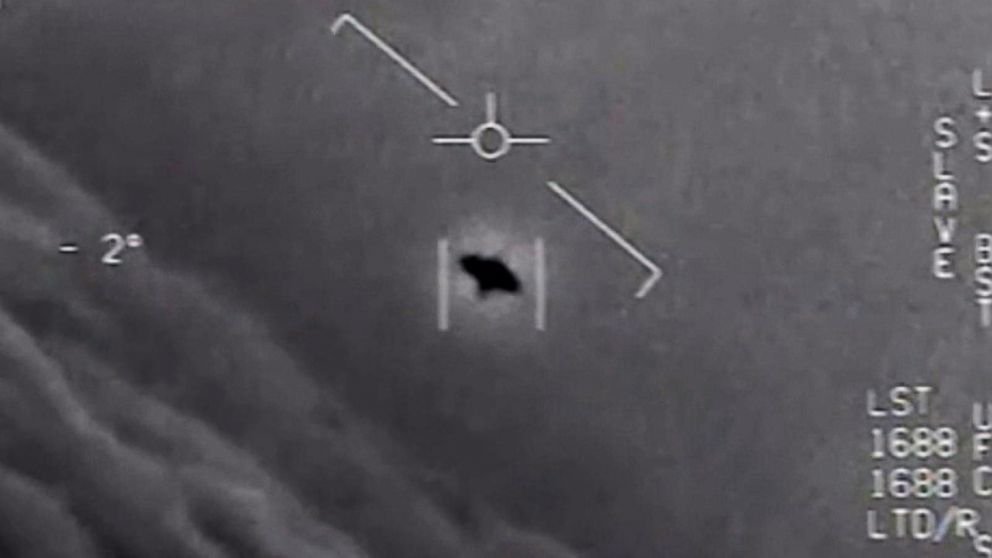
A still frame from FLIR1, the U.S. Navy's declassified infrared footage of the Nimitz encounter, filmed November 14, 2004 by Lieutenant Commander Chad Underwood using the F/A-18F's AN/ASQ-228 ATFLIR targeting pod. The Department of Defense officially confirmed the video on April 27, 2020, and has never identified the object. U.S. Navy / U.S. Department of Defense. Public domain.
The Nimitz Encounter (November 2004)
November 14, 2004, about one hundred miles southwest of San Diego. For several days before the encounter, the USS Princeton, a Ticonderoga-class guided-missile cruiser running the AN/SPY-1 radar, one of the most capable air-search systems the Navy operates, had been tracking anomalous objects. Senior Chief Kevin Day, the Princeton's lead radar operator, watched them appear at around eighty thousand feet, above the ceiling of any aircraft the Navy would routinely encounter, then descend rapidly, stop, and vanish from radar. The returns were solid, not noise and not atmospheric clutter. After several days, Day persuaded his commanding officer to vector fighters to intercept.
Commander David Fravor and Lieutenant Commander Jim Slaight arrived at the coordinates and saw the water first. Below them, the ocean surface was churning in a roughly circular area about the size of a Boeing 737, as if something large were displacing water from beneath. Hovering above the disturbance was a white, oblong, wingless object roughly forty feet long, darting laterally with no rotors, no exhaust plume, no visible control surfaces, and no heat signature consistent with any known engine. Fravor descended in a spiral to get closer. The object mirrored him, ascending in a counter-arc, apparently tracking his movement. When Fravor committed to a direct intercept, it accelerated away instantaneously and vanished from visual contact and all sensors. Seconds later, the Princeton called: the object was at the pilots' pre-briefed rendezvous point, sixty miles away. Transit time: under sixty seconds.
A second wave of F/A-18s launched. One of them, flown by Lieutenant Commander Chad Underwood, carried the AN/ASQ-228 ATFLIR targeting pod. Underwood acquired the object on radar and infrared and recorded the seventy-six seconds of black-and-white thermal footage that became public as FLIR1. The Department of Defense officially confirmed the video on April 27, 2020. It has never identified the object. In 2019, Kevin Knuth, a physics professor at the University at Albany and a former NASA Ames research scientist, co-authored a peer-reviewed kinematic analysis in Entropy with Robert Powell and Peter Reali of the Scientific Coalition for UAP Studies. Applying standard Newtonian physics to the reported observations, they calculated an implied acceleration for one recorded maneuver of approximately 5,400g, with peak power requirements running to roughly 1,100 billion watts. A human loses consciousness at around 5g. An F/A-18 tolerates about 7.5g in normal flight, 9g under emergency override.
Why it survives scrutiny. Multiple independent sensor systems, including the Princeton's SPY-1 radar, the E-2 Hawkeye's airborne radar, the fighters' onboard radar, and the ATFLIR infrared pod, all returned data on the same object with no coordination between them. Fravor testified under oath before Congress in 2023 that no known U.S. or adversary technology could explain what he saw. The Knuth, Powell, and Reali paper's conclusion, in the careful language of peer-reviewed physics: "these observations are either fabricated or seriously in error, or that these craft exhibit technology far more advanced than any known craft on Earth." It has not been rebutted.

The alleged landing site in Rendlesham Forest, Suffolk, England. Security Police from RAF Bentwaters investigated ground impressions here in the early hours of December 26, 1980, and Lieutenant Colonel Charles Halt returned two nights later with a portable audio recorder that captured the follow-up investigation in real time. Photo by Simon Leatherdale via geograph.org.uk. Licensed under CC BY-SA 2.0.
2. Rendlesham Forest (December 1980)
The strongest documented UAP case in European history. RAF Bentwaters and RAF Woodbridge were NATO air bases in joint use by the United States Air Force, and at the time they were among the most sensitive American nuclear weapons storage facilities in Western Europe. The people who witnessed what happened were not birdwatchers or late-night enthusiasts. They were armed military personnel at a nuclear-armed installation.
In the early hours of December 26, 1980, Security Police patrolling the forest noticed unusual lights and, investigating, found what appeared to be a structured craft that had landed in a clearing. Sergeant Jim Penniston approached close enough to touch it. He later described a triangular craft, smooth-surfaced, with symbols on its hull that he sketched in a notebook in real time. He and Airman John Burroughs remained with the object for roughly forty-five minutes before it departed.
Two nights later, U.S. Air Force Deputy Base Commander Lieutenant Colonel Charles Halt led a team back into the forest. Halt made an audio recording during his investigation, a contemporaneous field tape made in real time, not a reconstruction afterward. On it you can hear Halt describing the objects he is watching, the radiation readings being taken at the landing site, and the erratic lights moving through the trees. The tape exists and has been publicly released. The landing site itself was physically marked: three ground impressions in an equilateral triangle pattern, consistent with landing struts. Radiation readings taken at the impressions by Staff Sergeant Monroe Nevels, the base's disaster preparedness technician, peaked at 0.1 mR/h, above ambient background. The surrounding trees showed lower but still elevated readings, 0.05 to 0.07 mR/h in their damaged bark, consistent with exposure from the same localized source.
Why it survives scrutiny. Physical trace evidence matters more than eyewitness testimony. Eyewitness memory is reconstructive; a radiation reading taken at a specific location on a specific night is not. The readings at Rendlesham were documented by trained personnel using calibrated equipment and recorded in the official investigation files, with a contemporaneous audio recording of the follow-up investigation. Nick Pope, who spent three years working UFO investigations for the British MoD, along with Burroughs and Penniston, documented the case in detail in Encounter in Rendlesham Forest (2014). The UK Ministry of Defence's public position that the incident posed no defense significance requires ignoring the physical evidence rather than explaining it.
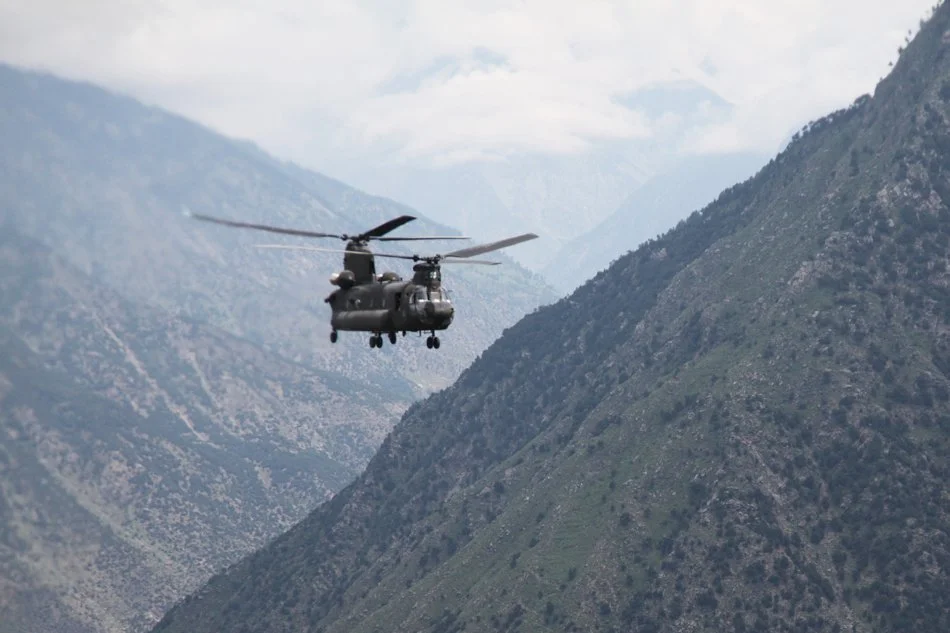
A U.S. Army CH-47 Chinook in flight. On the night of December 29, 1980, Betty Cash, Vickie Landrum, and seven-year-old Colby Landrum watched what they estimated at more than twenty twin-rotor military helicopters, many of them Chinooks, escorting a diamond-shaped fiery object over the pine forests of east Texas. U.S. Army photo. Public domain.
3. Cash-Landrum (December 1980)
Three days after the Rendlesham landing, on the other side of the Atlantic, a different physical-evidence case was unfolding. On the evening of December 29, 1980, Betty Cash, her friend Vickie Landrum, and Vickie's seven-year-old grandson Colby were driving near Huffman, a suburb of Houston, when a fiery diamond-shaped object descended to treetop height over the road ahead of them and hovered more than a hundred feet away, with flames appearing to shoot down from its underside.
Betty stopped the car and got out to watch. Colby pleaded with the adults to get back inside, and eventually they did, though Betty had already spent significantly more time in the open air near the object than the others had. The car door grew too hot for her to touch with a bare hand. As the object began to move off, the witnesses counted more than twenty helicopters, many of them twin-rotor Chinooks, escorting it at a steady distance of roughly three-quarters of a mile, never closing in.
Within hours all three witnesses developed severe physical symptoms consistent with radiation exposure. Betty, who had spent the most time outside the car, was affected worst. Cash and Landrum sued the federal government for twenty million dollars, arguing that the object was a malfunctioning U.S. military craft. The suit was dismissed on the government's sworn position that no such craft was owned, operated, or in the inventory of the Air Force, the Army, the Navy, or NASA (Timothy Good, Need to Know, 2006). Betty Cash died on December 29, 1998, eighteen years to the day after the encounter, of health problems attributed to that night.
Why it survives scrutiny. A vehicle radiating enough heat and apparent radiation to injure three people at a hundred feet, requiring an escort of twenty aircraft to manage, and belonging by the government's own sworn testimony to no one, does not resolve into a comfortable answer in either direction. Real physical injuries, three witnesses, court-documented federal investigation, and no confirmed cause. The record sits two days after Rendlesham's own trace evidence, unexplained by the same standard.
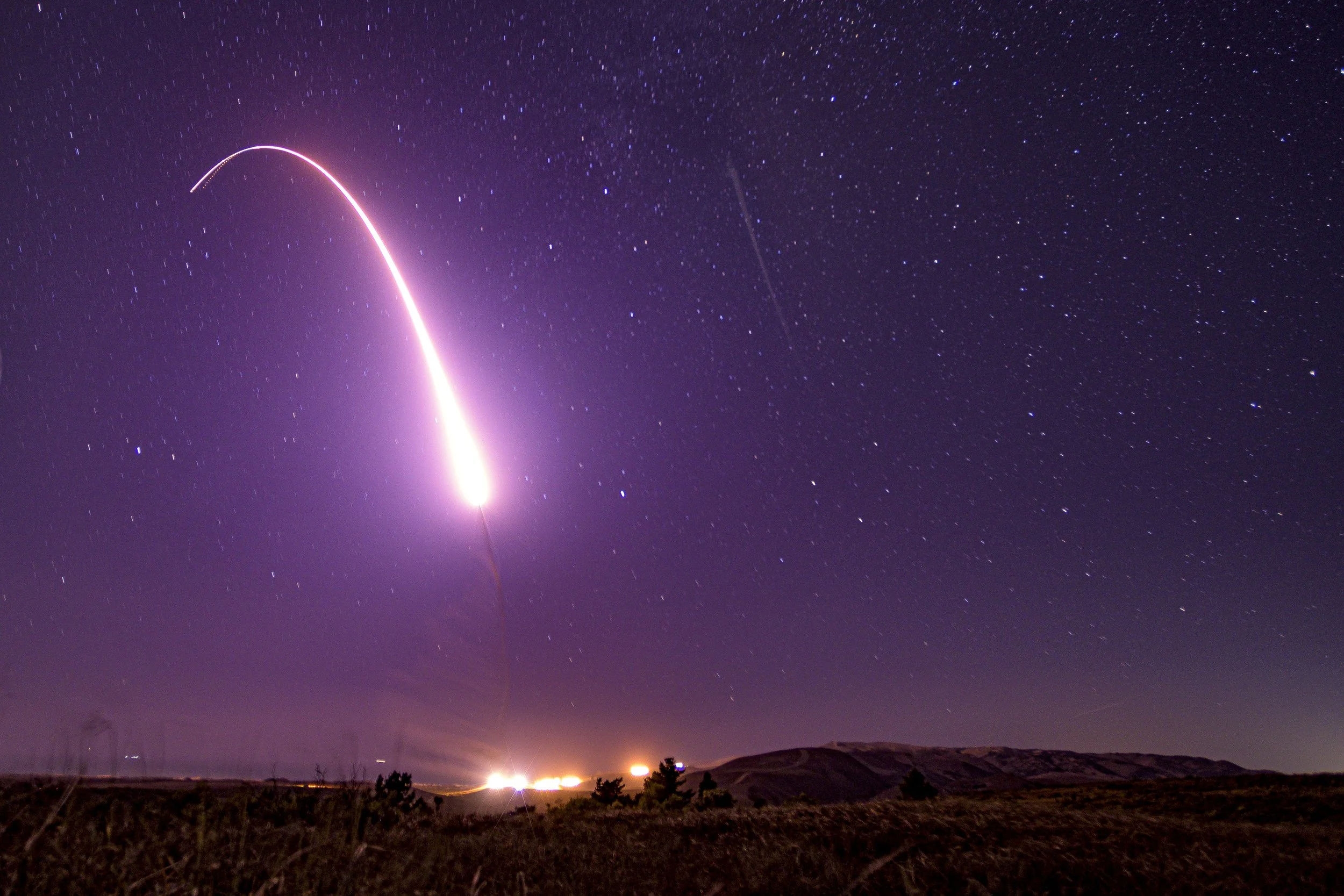
An unarmed Minuteman III intercontinental ballistic missile during an operational test launch. The same missile system stood on alert at Malmstrom Air Force Base on the night of March 16, 1967, when all ten warheads at Echo Flight simultaneously went offline as a glowing object hovered above the missile field. U.S. Air Force photo. Public domain.
4. Malmstrom AFB, Echo and Oscar Flights (March 1967)
On March 16, 1967, at Malmstrom Air Force Base in Montana, ten Minuteman I intercontinental ballistic missiles designated Echo Flight went simultaneously to "no-go" status. Unlaunchable, all ten, at once. Security personnel on the surface reported a UAP over the launch control facility during the same window. The crew on duty, Captain Eric Carlson and First Lieutenant Walter Figel, watched the missiles fail one after another on their status panel with no diagnostic explanation available to them in real time.
Eight days later, on March 24, 1967, a separate but related event occurred at Oscar Flight, another Malmstrom launch complex. Captain Robert Salas was the deputy missile combat crew commander on duty. He has testified about what happened publicly, repeatedly, under his own name, and under oath before Congress decades later. A security guard called down to the launch capsule to report a glowing red object hovering silently over the front gate, moving in a way no aircraft moves. Within a short span, the missiles at Oscar Flight also began going offline, one after another, exactly as they had at Echo Flight.
Lieutenant Robert Jamison, a missile maintenance officer dispatched to the Oscar Flight sites afterward, later gave researcher Robert Hastings a firsthand account of what commanders told his team before they left: "There had been some UFO activity that had been messing things up." The instructions that followed were direct: if a UFO was sighted, get into the silo and close the personnel hatch. That was not a rumor circulating among junior enlisted men. It was guidance passed down through the chain of command, appropriate only if the chain of command took the correlation seriously. Salas has since expanded the documentary record in two subsequent books, Faded Giant (co-authored with James Klotz) and UAPs and the Nuclear Puzzle, adding corroborating witnesses located in the intervening years.
Why it survives scrutiny. The Air Force's official investigation into Echo Flight acknowledged the shutdown but not the UAP correlation, attributing the failure instead to electromagnetic interference from a ground-based power transformer, an explanation several of the missile officers present at the time have publicly disputed. In a May 2022 open congressional UAP hearing, Representative Mike Gallagher asked the Deputy Director of the Pentagon's UAP Task Force whether it had investigated Malmstrom. The answer, on the hearing record: no. Fifty-five years after ten Minuteman missiles went offline beneath the Montana plains, the office responsible for investigating had not looked at it.
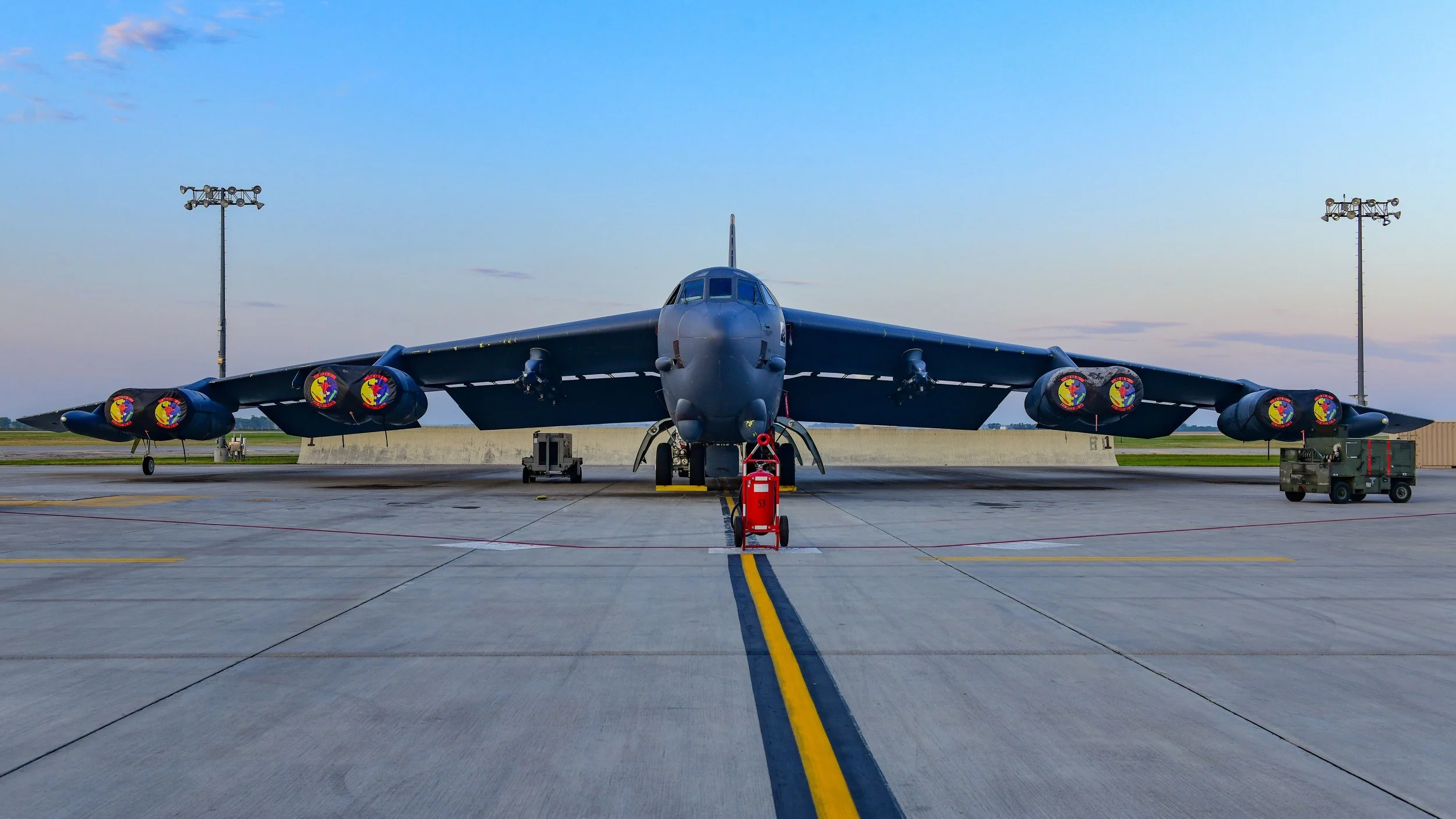
A B-52H Stratofortress at Minot Air Force Base, North Dakota. On October 24, 1968, the B-52 crew on approach to Minot, along with ground-based Minuteman missile security teams and the base air traffic controllers, tracked the same unidentified object on airborne radar, ground radar, and visual sighting simultaneously. U.S. Air Force photo by Airman Alysa Knott. Public domain.
5. Minot AFB (October 1968)
Malmstrom was not an isolated event, and it was not even the first of its kind that year. In September 1966, six months before Echo Flight, Minot Air Force Base in North Dakota had its own version of the same event. First Lieutenant David Schindele, a launch control officer preparing to relieve the crew at an underground missile site, learned that witnesses on the surface had watched an eighty- to one hundred-foot disk-shaped object with flashing lights hover silently above the launch control capsule, sixty feet below ground. When Schindele descended into the control room, all ten missiles at the site were showing a "guidance and control system malfunction" and were unable to launch. He was ordered to keep quiet about it and stayed silent for nearly forty years.
The more extensively documented Minot incident occurred on October 24, 1968, and it is one of the best-corroborated UAP incidents in the American military record by any standard, nuclear or otherwise. More than sixteen Air Force personnel on the ground at Minot, along with the flight crew of a B-52 bomber orbiting overhead, independently reported observing a large, brilliantly lit object that shifted color from white to amber to green and, at one point, appeared to split into two separate objects.
Radar at the base tracked an unidentified return consistent with the visual sightings. Strategic Air Command at Offutt Air Force Base initiated a formal investigation, and the pilot of the B-52, Major James Partin, reported directly to the base operations commander. The Air Force's eventual public explanation attributed the sighting to a combination of the stars Sirius and Vega and an unspecified plasma effect.
Why it survives scrutiny. That explanation accounts for neither the radar tracking, nor the object splitting into two, nor the consistency of the color-change sequence reported independently by observers in two different locations who could not see each other's vantage point. Minot has what the record demands: multiple independent categories of witness (ground security, aircrew, radar operators), a formal SAC investigation, and a nuclear weapons context that made the incident impossible to file away as inconsequential. It was not.

A palafita stilt village of the kind common along the rivers and estuaries of the Brazilian Amazon. Between August 1977 and January 1978, roughly eighty residents of similar communities on Ilha de Colares in Pará state reported being struck by beams of light from hovering objects locals called chupa-chupa, prompting the Brazilian Air Force to launch a formal investigation, Operação Prato. Palafita Brasil by Valter Campanato / Agência Brasil, licensed under CC BY 3.0 BR (https://creativecommons.org/licenses/by/3.0/br/deed.en).
6. Colares, Brazil (1977)
The material here is genuinely disturbing. In 1977, residents of the island of Colares and the surrounding communities in Pará state in northern Brazil began reporting attacks from the sky. The phenomenon had a name locally: chupa-chupa, Portuguese slang for "suckers," for what the beams of light seemed to do. People described being struck by focused beams from low-flying objects, finding burn marks and puncture wounds on their bodies, experiencing hair loss in the affected area, and developing symptoms their local doctors couldn't explain.
The Brazilian Air Force responded. Beginning in October 1977, the First Regional Air Command launched a formal military investigation called Operação Prato (Operation Saucer), commanded by Captain Uyrangê Hollanda Lima. Hollanda has said publicly that he went in as a skeptic, tasked with disproving the whole thing. His team deployed to the region for roughly four months. They photographed objects, filmed them on 16mm, interviewed hundreds of witnesses, and compiled medical records for at least thirty-five individuals with documented physical injuries attributed to beam exposure. The mission produced approximately three hundred military photographs and a report running to about five hundred pages. Years later, Hollanda gave researcher Ademar Gevaerd an on-record interview: he confirmed the objects were real and structured, and stated his personal conclusion that they were not of terrestrial origin. He died not long afterward, reportedly by suicide.
Jacques Vallée, a computer scientist who helped design early internet protocols and who has spent decades conducting field investigations of close-encounter cases, documented what he found in Colares in Confrontations (1990). His review of the medical records described burns and blackened tissue at the beam contact site, hair loss consistent with follicle destruction, puncture marks inside the burned area resembling large mosquito bites, weakness, dizziness, lowered blood pressure, and anemia with reduced hemoglobin levels. Vallée noted that these symptoms were consistent with exposure to high-powered pulsed microwaves, an actual known radiation modality, not a metaphysical claim. The local physician who treated victims at the time, Dr. Wellaide Cecim Carvalho de Oliveira, had herself initially chalked the reports up to hallucination and drunkenness. She changed her mind once the same clinical picture kept showing up. By her own later account, she reported what she was seeing to her superiors. They didn't believe her, and told her to stop suggesting that anything unusual was going on. She kept treating patients anyway.
Why it survives scrutiny. A four-month formal military investigation. Roughly three hundred photographs. A five-hundred-page report. Thirty-five documented cases of physical injury with a consistent clinical presentation. The commanding officer stating on record before his death that the objects were real and non-terrestrial. Medical records reviewed by a credentialed field investigator whose analysis identifies a known radiation modality as the mechanism. This is not folklore. It is documentation.
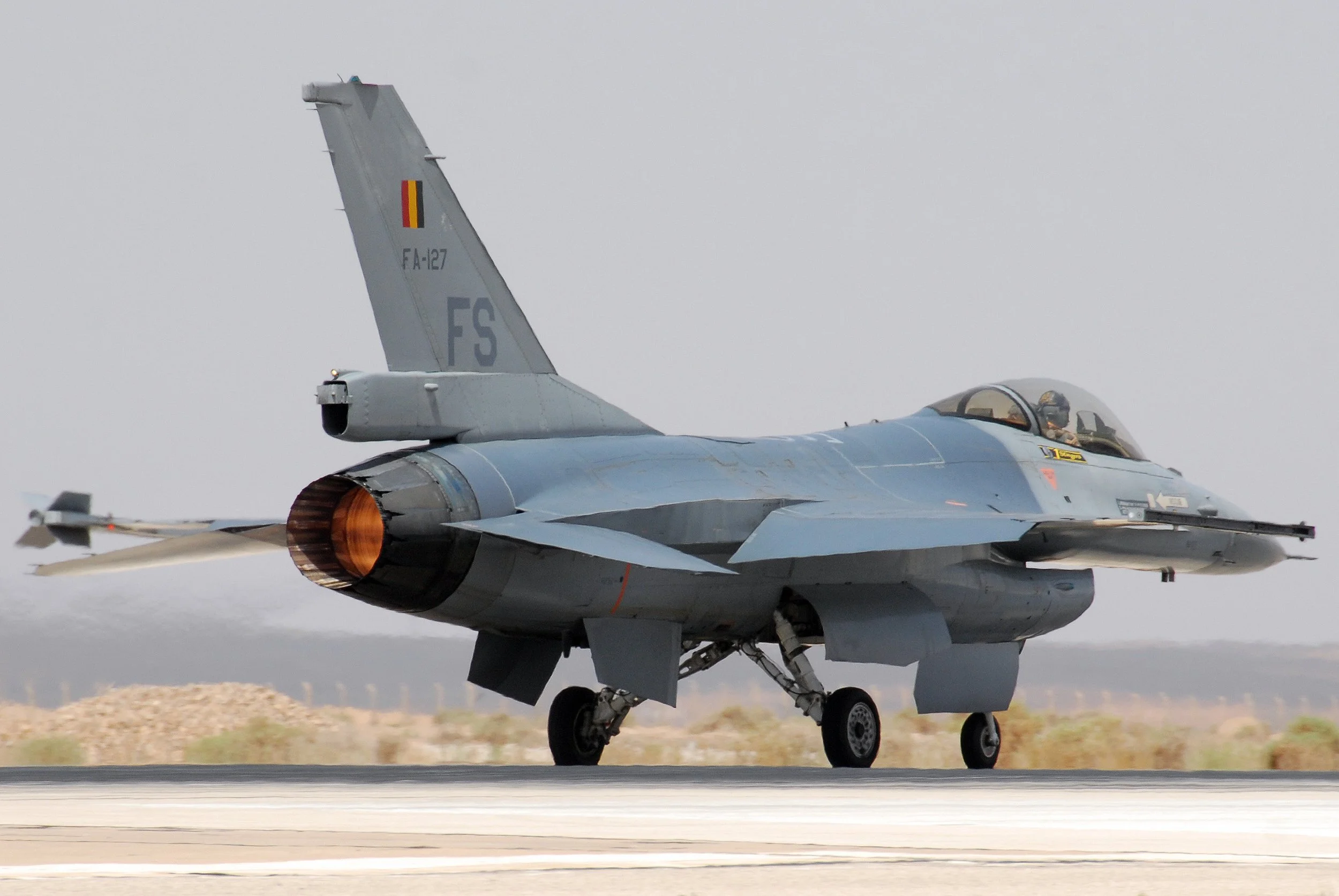
A Belgian Air Force F-16 Fighting Falcon. On the night of March 30-31, 1990, two Belgian F-16s were scrambled to intercept unidentified objects tracked simultaneously by multiple ground radar stations and by police officers observing from the ground. The pilots achieved brief radar locks that the objects broke by executing accelerations exceeding what any known aircraft of the era could survive. U.S. Air Force photo by TSgt Wolfram M. Stumpf. Public domain.
7. The Belgian Wave (1989-1990)
For more than two years beginning in late 1989, hundreds of witnesses across Belgium, including police officers who had joked dismissively about the first radio calls until they saw it themselves, watched a triangular craft with a wingspan of roughly a hundred and twenty feet cross the sky. Belgian Major General Wilfried De Brouwer, then a colonel and chief of the Operations Division of the Belgian Air Staff, was tasked by his defense minister with figuring out what was violating the country's airspace.
De Brouwer's own account of the wave's first night, as later published in Leslie Kean's UFOs: Generals, Pilots, and Government Officials Go on the Record (2010): "a majestic triangular craft with a span of approximately a hundred and twenty feet and powerful beaming spotlights, moving very slowly without making any significant noise but, in several cases, accelerating to very high speeds." University scientists and government officials investigated the wave for years. De Brouwer's investigation ultimately examined roughly 650 wave cases and found more than 500 unexplained.
On the night of March 30-31, 1990, two Belgian Air Force F-16s were scrambled to intercept the object over Wallonia. They locked radar onto a triangular craft and tracked accelerations beyond any conventional aircraft's known performance. The pilots never achieved visual contact. The objects were nearly invisible to radar for most of the wave, appearing intermittently and then disappearing. Nobody in that investigation ever identified them.
Why it survives scrutiny. This is the single largest documented multi-witness UAP event in Western European history, investigated by a NATO member's own air force. Belgium's official investigation closed the case as inconclusive rather than explained, which is a specific and honest verdict rather than a dismissal. The Belgian Air Force did not have an institutional incentive to fabricate the event; if anything, the pressure ran the other way. What they reported, they reported at institutional cost.
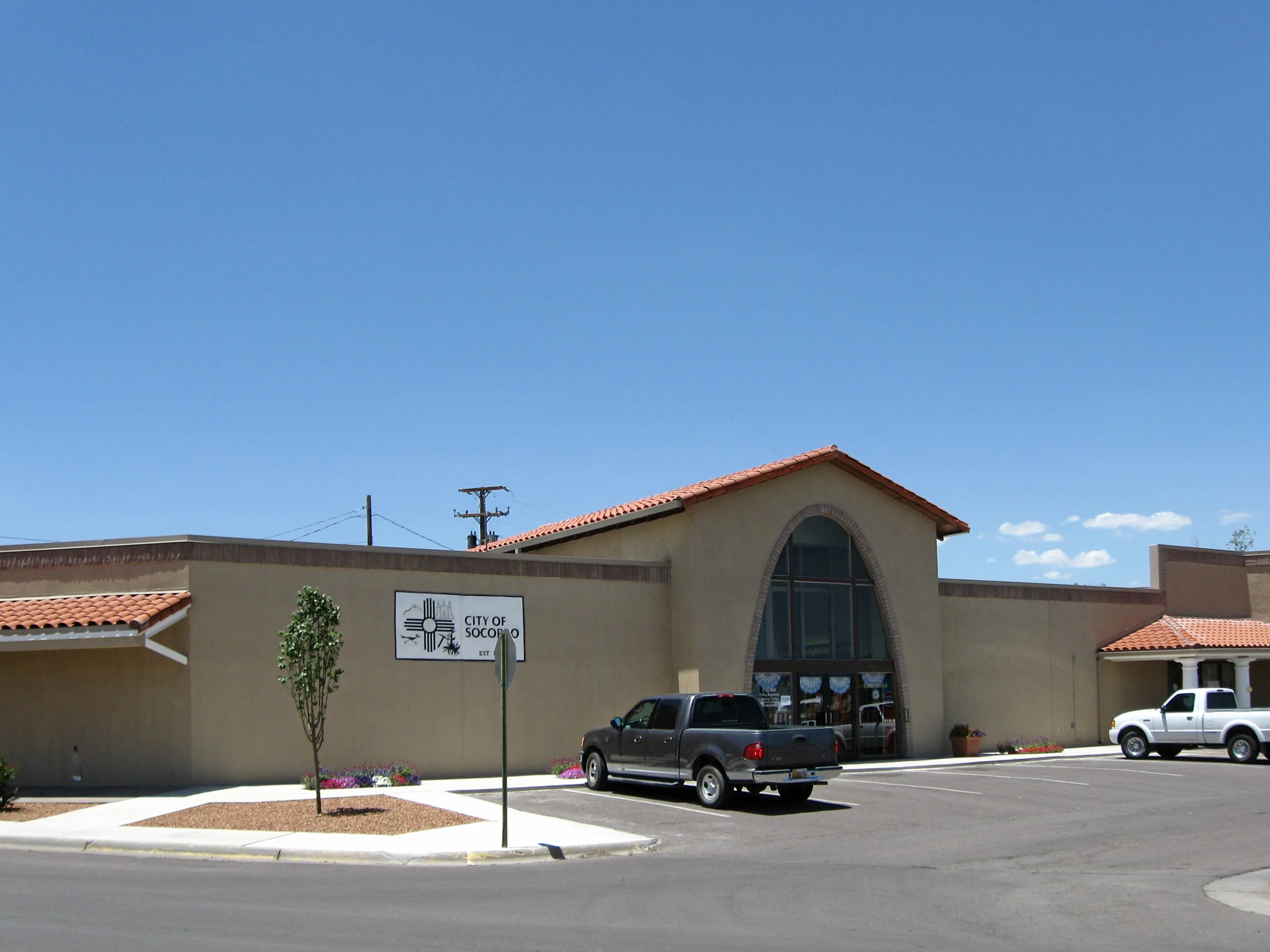
Socorro, New Mexico. On the afternoon of April 24, 1964, Socorro police officer Lonnie Zamora broke off a speeding-violation pursuit to investigate what he thought was an exploding vehicle in an arroyo on the edge of town. What he found instead were two small figures beside a landed egg-shaped craft, ground impressions from four landing legs, and scorched brush. J. Allen Hynek called it the case that changed his mind.
8. Socorro, New Mexico (April 1964)
On the afternoon of April 24, 1964, in Socorro, New Mexico, police officer Lonnie Zamora was in his patrol car chasing a speeder when he heard a roar and saw a flame to the southwest, about half a mile out. Thinking it might be an explosion at a local dynamite shed, he turned toward it. What he found instead, parked in the desert scrubland, was a metallic object roughly the size and shape of a car on its side. Two small figures in white coveralls stood near it. When they noticed Zamora pulling in, one of them looked directly at his cruiser and, by his account, seemed to startle. He radioed dispatch: "10-44. I'll be 10-6 checking a wreck down in the arroyo."
Then the object rose. A blue-orange flame underneath it, a loud roar building from low to loud, and then it leveled off about ten to fifteen feet above the desert floor and moved away in a straight line at high speed until it disappeared over the mountains. State police sergeant Sam Chavez arrived within minutes and found Zamora visibly shaken. "You look like you've seen the devil," Chavez said. "Maybe I have," Zamora answered. What Chavez also found: four rectangular impressions in the soil where the object had stood, and charred brush underneath the takeoff point.
The FBI investigated that evening. The Army's Captain Richard Holder came out by flashlight and documented the ground disturbances. The next morning, a colonel in the Pentagon called Holder unexpectedly and asked him to read his report aloud over the phone. Holder later said he always wondered why they were so interested. J. Allen Hynek was at Wright-Patterson when word came in and was dispatched to Socorro alone, on the theory that arriving without military accompaniment would make the witnesses more comfortable. After interviewing Zamora and examining the site, Hynek wrote in a confidential memo: "There's never been a strong case with so unimpeachable a witness." The Air Force ultimately admitted in its own internal journal that Zamora "is puzzled by what he saw, and frankly, so are we."
Why it survives scrutiny. Ground impressions and scorched earth, documented by multiple law enforcement personnel, military investigators, and federal agents, produced by an object observed in daylight at close range by a credentialed witness with no motive for fabrication. The Air Force checked with NASA, with fifteen industrial companies researching lunar-landing technology, and with every military installation in the region. Their formal conclusion: "The findings were altogether negative." They never identified what made those marks. This is the case that changed Hynek's mind.
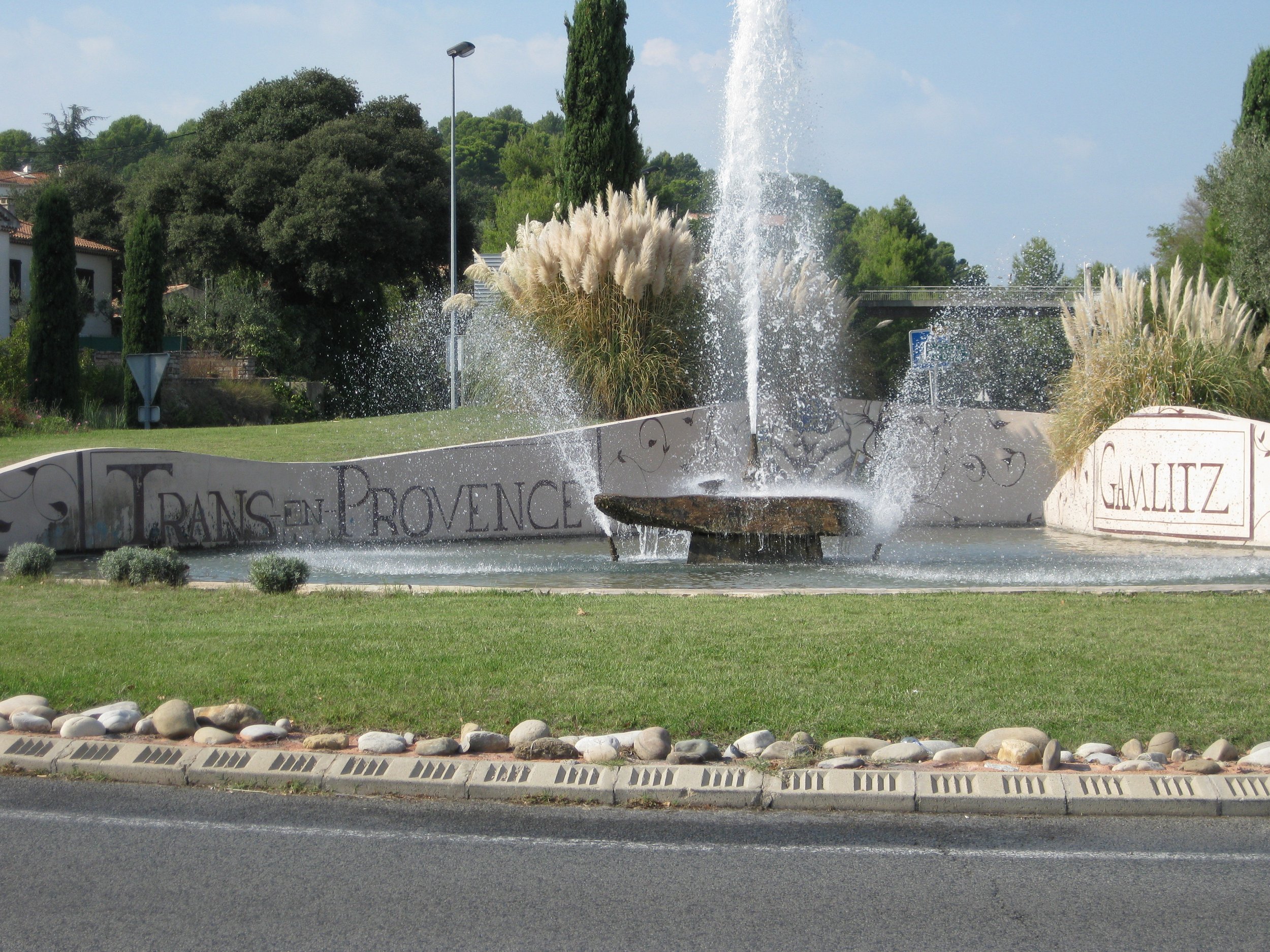
Trans-en-Provence in the Var department of southern France. On January 8, 1981, retired stonemason Renato Nicolaï watched a disc-shaped object descend, hover, and depart from his terraced farm property just outside this village. Investigators from GEPAN, the French national space agency's UAP unit, arrived within days and collected the most rigorous physical trace samples in the history of UFO investigation. Photo by Mairie de Trans-en-Provence via Wikimedia Commons. Licensed under CC BY-SA 4.0.
9. Trans-en-Provence (January 1981)
On January 8, 1981, a retired stonemason named Renato Nicolaï was working on his property in Trans-en-Provence in southern France when he heard a whistling sound and watched a disc-shaped object descend, hover briefly above the ground, and depart. He reported the sighting to the local gendarmerie the same day. What happened next set the case apart from every other landing report in the record: investigators from GEPAN, the French national space agency's UAP research unit, arrived within days and conducted soil and plant sampling under controlled conditions. It was an approach to physical evidence collection that no American UFO investigation before or since has matched in rigor.
Laboratory analysis found that the ground at the site had been mechanically compressed by an estimated four to five metric tons, thermally altered to between roughly three hundred and six hundred degrees Celsius, and carried trace deposits of phosphate and zinc not present in surrounding soil. Alfalfa growing at and near the site showed chlorophyll depletion of thirty to fifty percent compared to unaffected plants nearby, a biochemical effect GEPAN's own report acknowledged it could not confidently explain given the state of botanical science at the time. The case remains classified D by the French government to this day.
Skeptical researchers have proposed that the ground marks resulted from a heavy vehicle, possibly a cement mixer used in nearby construction, and the case has been contested in the decades since on exactly those grounds. That the argument is still being had, on the strength of physical samples collected and preserved by a national space agency rather than a private investigator, is itself the point.
Why it survives scrutiny. Trans-en-Provence is the most rigorously documented physical trace case in UAP history. The evidence exists as archived soil samples, calibrated laboratory measurements, and a formal government investigative file, not as testimony filtered through memory. France built the institutional infrastructure to collect the data properly, and forty-plus years later that data still refuses to resolve into a conventional answer. The debate over whether it was a cement mixer or something else is a debate France made possible. Almost no other country did.
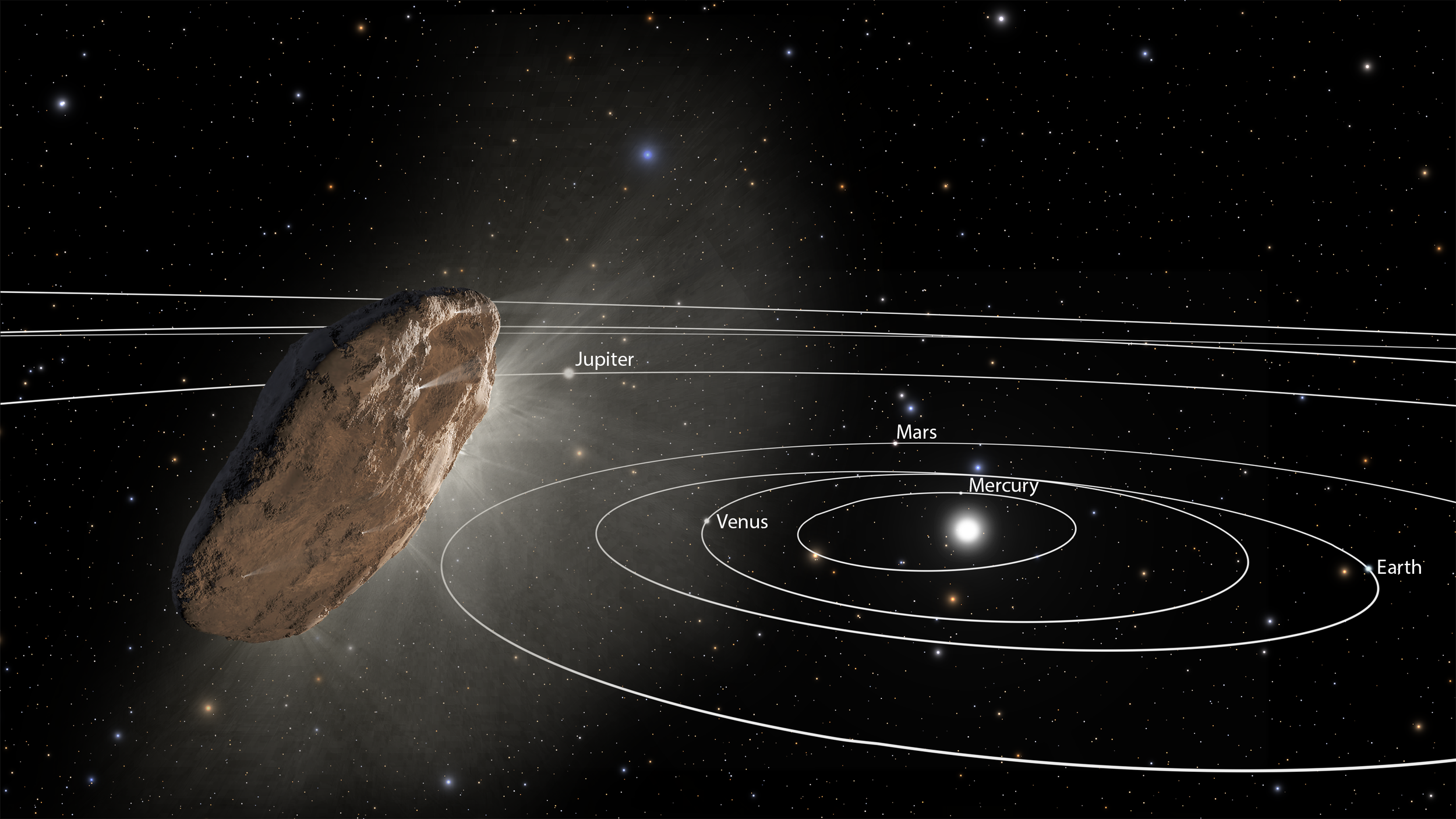
Artist's rendering of ʻOumuamua, the first confirmed interstellar object ever observed passing through our solar system. Detected by the Pan-STARRS telescope in Hawaii in October 2017, its non-gravitational acceleration on the way out of the solar system produced a nine-sigma anomaly and prompted Harvard astronomer Avi Loeb to publish a formal hypothesis that it might not be natural. NASA, ESA, and J. Olmsted and F. Summers (STScI). Public domain.
10. ʻOumuamua (October 2017)
In October 2017, the Pan-STARRS telescope in Hawaii detected an object passing through our solar system on a hyperbolic trajectory, coming from outside the solar system, swinging around the sun, and heading back out. It was the first confirmed interstellar visitor ever detected by human astronomers. They named it ʻOumuamua, Hawaiian for "messenger from afar."
ʻOumuamua had an extreme elongated shape unlike any known asteroid or comet, with some estimates suggesting it was roughly ten times longer than it was wide, closer to a pancake or a cigar than any natural rock formation ever catalogued. It tumbled oddly, in a way that didn't fit standard rotational models for natural objects. And then came the anomaly that changed the conversation: as ʻOumuamua departed the solar system, it accelerated. Not a lot. But it accelerated in a way that couldn't be explained by gravity. The most obvious natural explanation for non-gravitational acceleration in a comet is outgassing (volatile material heated by the sun venting as gas, producing thrust). Astronomers looked for outgassing evidence. There wasn't any. No detected gas. No dust cloud. Nothing.
Avi Loeb, then chair of Harvard's Department of Astronomy, published a paper in 2018 with Shmuel Bialy in Astrophysical Journal Letters. Their argument: one physically coherent explanation for ʻOumuamua's anomalous acceleration, given its extreme flat geometry and the absence of outgassing, is radiation pressure, the gentle push of sunlight, acting on an object with an extraordinarily high surface-area-to-mass ratio. Their calculation: something on the order of a millimeter thick and at least twenty meters wide. A lightsail. Loeb and Bialy were explicit: this could be a defunct piece of alien technology drifting through the galaxy, or it could be an active probe. Loeb expanded on the argument in Extraterrestrial: The First Sign of Intelligent Life Beyond Earth (2021), engaging his critics' proposed alternatives (hydrogen outgassing that would be nearly impossible to detect, unusual tumbling that mimicked certain comet behaviors, measurement artifacts) specifically and quantitatively.
Why it survives scrutiny. This is not a UFO story. It is a peer-reviewed astronomy paper in a mainstream journal, authored by the former chair of Harvard's astronomy department, arguing that one physically coherent explanation for a genuinely anomalous interstellar object is artificial manufacture. Loeb has not retracted the paper. His critics' alternatives require their own implausibilities, and none of them have been experimentally confirmed either. The observations remain what they are.